ISRC vs UPC vs ISWC: 3 Music Codes Every Artist in Cameroon Should Know

A lot of artists in Cameroon are dropping music every day, but many still don’t understand the codes that help their songs get tracked, registered, and paid properly.

Behind every release on streaming platforms, there are three important codes working quietly in the background:

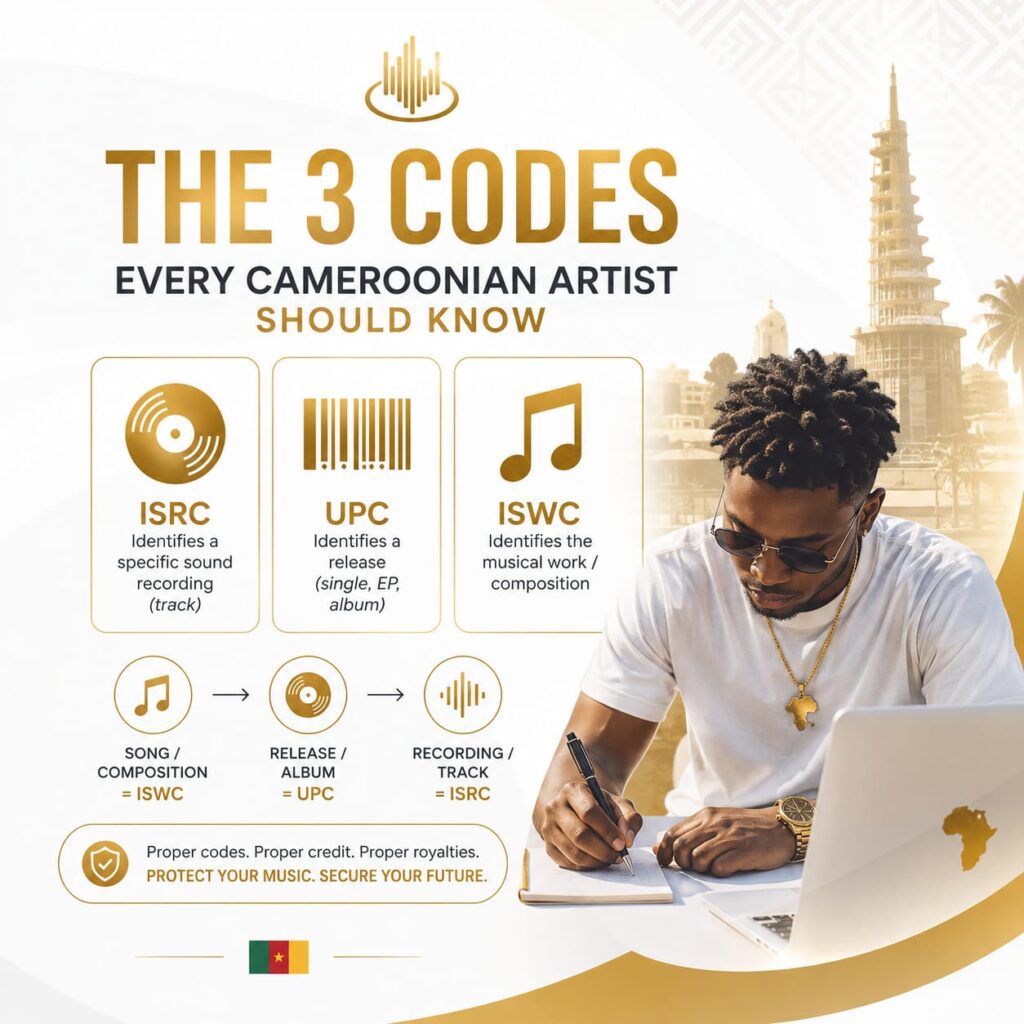
ISRC — This identifies a specific recording or track.
Every version of a song has its own ISRC.
UPC — This identifies the release itself, whether it’s a single, EP, or album.
ISWC — This identifies the composition, meaning the actual song you wrote, including the lyrics and melody.
Think of it like this:

The song you wrote = ISWC
The recording you uploaded = ISRC
The project or release package = UPC

For many artists, producers, managers, and rights holders in Cameroon, missing royalties often comes down to something simple: incomplete or incorrect metadata. A song can perform well online and still fail to pay out properly if the information behind it is not correctly registered.

As Cameroon’s music scene keeps growing and reaching wider audiences, understanding ISRC, UPC, and ISWC is no longer just industry knowledge for labels and publishers. It is essential for every serious artist who wants their music to be properly protected and monetized.

Cameroon artists, managers, and music professionals: which of these three codes causes the most confusion for you? The ISRC, UPC, or ISWC?
Red and Black Modern Breaking News Facebook Post

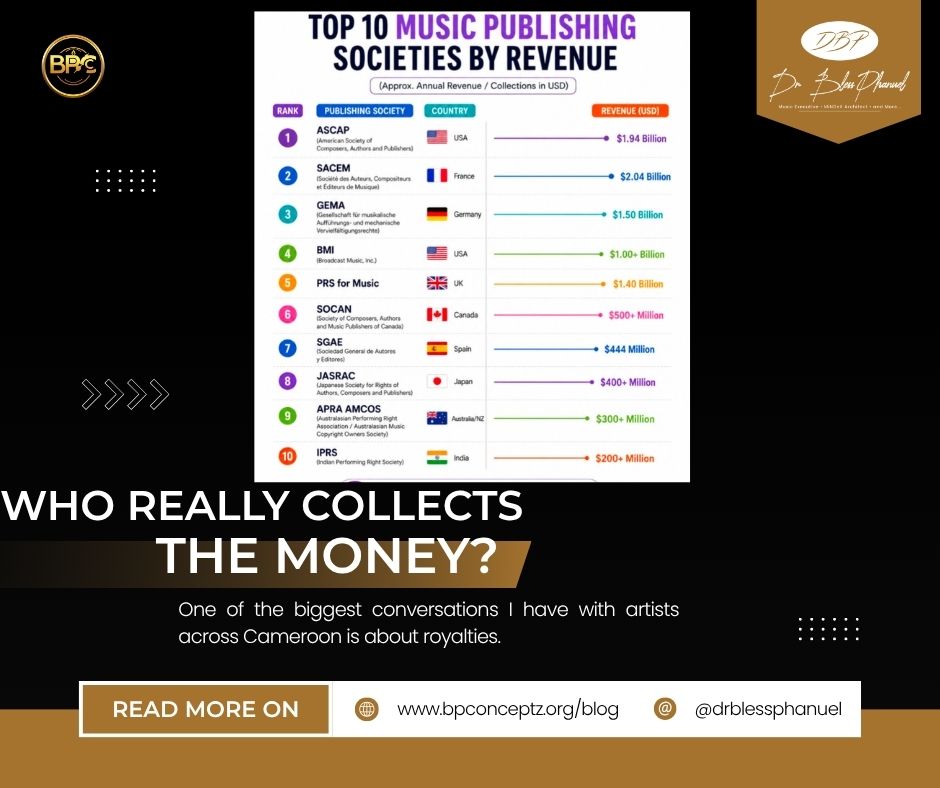
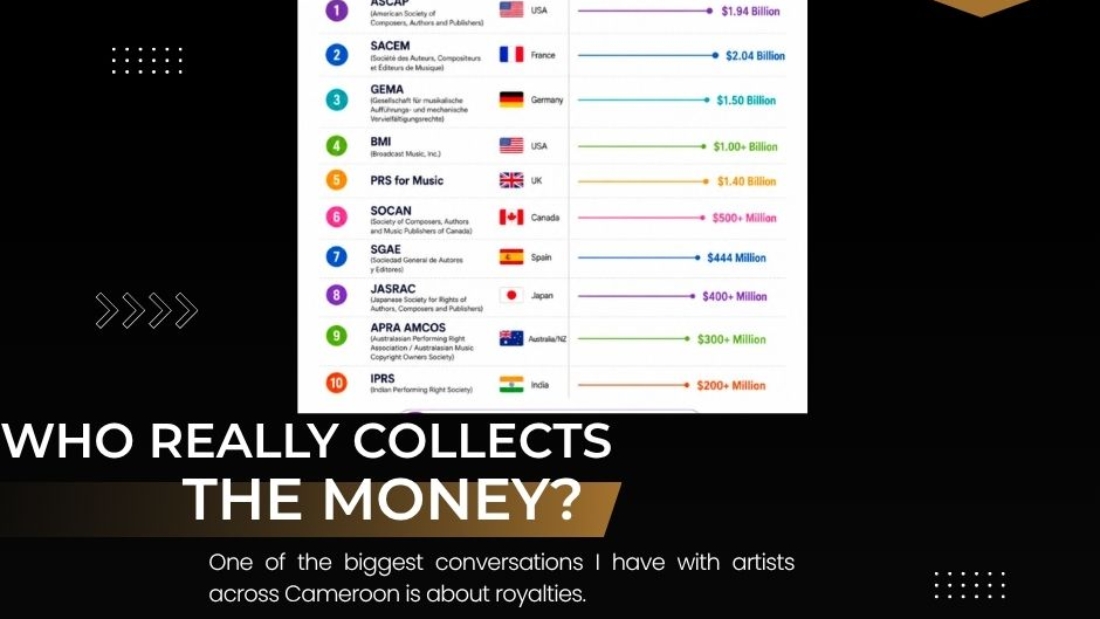
WHO REALLY COLLECTS THE MONEY?

One of the biggest conversations I have with artists across Cameroon is about royalties.

An artist releases a song, gets thousands of streams, hears the song on radio, performs it at events, sees it circulating online, and then asks a simple question:

“Where is the money?”

The truth is that the global music industry runs on a system that many African artists still do not fully understand.

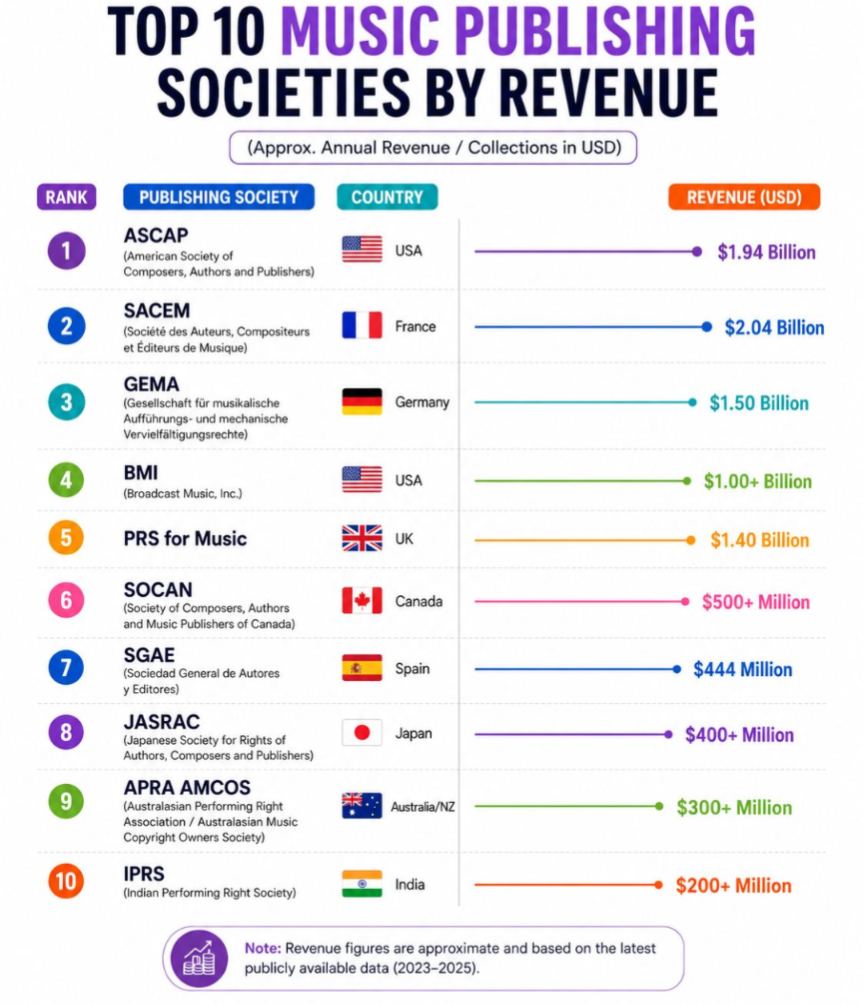
Behind every stream, broadcast, public performance, and license is a network of publishing societies and collective management organizations responsible for collecting and distributing royalties to songwriters, composers, and publishers.

Organizations such as ASCAP and BMI in the United States, SACEM in France, GEMA in Germany, PRS for Music in the United Kingdom, and IPRS in India collect billions every year on behalf of rights holders.

Yet many artists in our part of the world focus only on recording and releasing music without understanding the systems that generate long term income.

In many cases, artists are not poor because their music is not making money. They are losing money because they are disconnected from the structures that collect it.

As the music industry becomes increasingly digital, knowledge of publishing, copyright, neighboring rights, royalty collection, and music administration is becoming just as important as talent.

The artist who understands the business side of music has a significant advantage over the artist who focuses only on the creative side.

This is why I continue to advocate for music business education across Cameroon and Francophone Africa. We cannot build sustainable careers if we do not understand how value is created, tracked, collected, and distributed.

The future of African music will not only be shaped by great songs. It will also be shaped by creators who understand ownership, rights, and monetization.

The question is no longer whether your music can generate revenue.

The question is whether you understand where that revenue comes from and how to claim it.

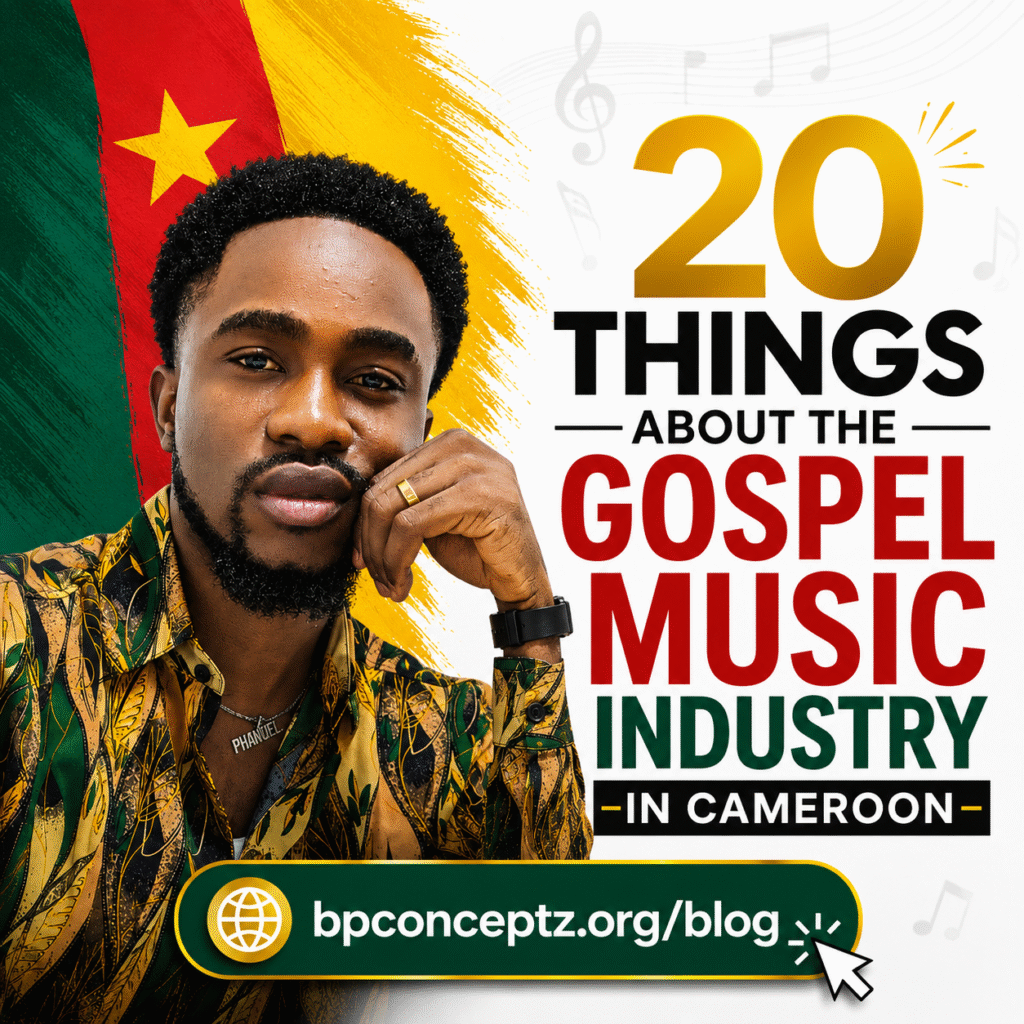
20 THINGS ABOUT THE GOSPEL MUSIC INDUSTRY IN CAMEROON

20 THINGS ABOUT THE GOSPEL MUSIC INDUSTRY IN CAMEROON

Let’s start with the strengths before we discuss the challenges.

10 STRENGTHS OF THE GOSPEL MUSIC INDUSTRY IN CAMEROON

  1. We have an abundance of talent across all regions of the country.
  2. Cameroon is blessed with linguistic diversity, allowing Gospel music to thrive in English, French, Pidgin, and numerous local languages.
  3. Our worship culture is strong and continues to inspire authentic music.
  4. The industry is home to passionate artists who continue to create despite limited resources.
  5. The quality of music production has improved significantly over the years.
  6. Gospel music enjoys support from churches, ministries, and faith-based communities.
  7. Digital platforms have made it easier for Gospel artists to reach global audiences.
  8. There is a growing number of young creatives entering the industry with fresh ideas and innovation.
  9. Cameroonian Gospel music has the potential to compete on the continental and global stage.
  10. The industry is gradually receiving more attention from media, brands, and stakeholders than ever before.

NOW, 10 REALITIES WE MUST ADDRESS

  1. Talent has never been our biggest problem. Structure is.
  2. We have more singers than music entrepreneurs.
  3. Many artists know how to record songs but few understand publishing, royalties, copyright, and music monetization.
  4. The Gospel audience is larger than many people think, but it remains largely underserved.
  5. Consistency remains one of the biggest factors separating growth from stagnation.
  6. Most artists struggle financially, but many also fail to invest strategically in their careers.
  7. Collaboration remains one of the industry’s most underutilized growth tools.
  8. The industry is becoming increasingly digital, yet many artists are not maximizing the opportunities available online.
  9. The next generation of successful Gospel artists will require both ministry excellence and business competence.
  10. The future of Gospel music in Cameroon will depend not only on talent, but also on leadership, professionalism, systems, and sustainability.

The truth is simple: the Gospel music industry in Cameroon has tremendous potential. Our strengths are real, but so are our challenges.

The question is not whether we have what it takes.

The question is whether we are willing to build the industry we all want to see.