A lot of artists in Cameroon are dropping music every day, but many still don’t understand the codes that help their songs get tracked, registered, and paid properly.
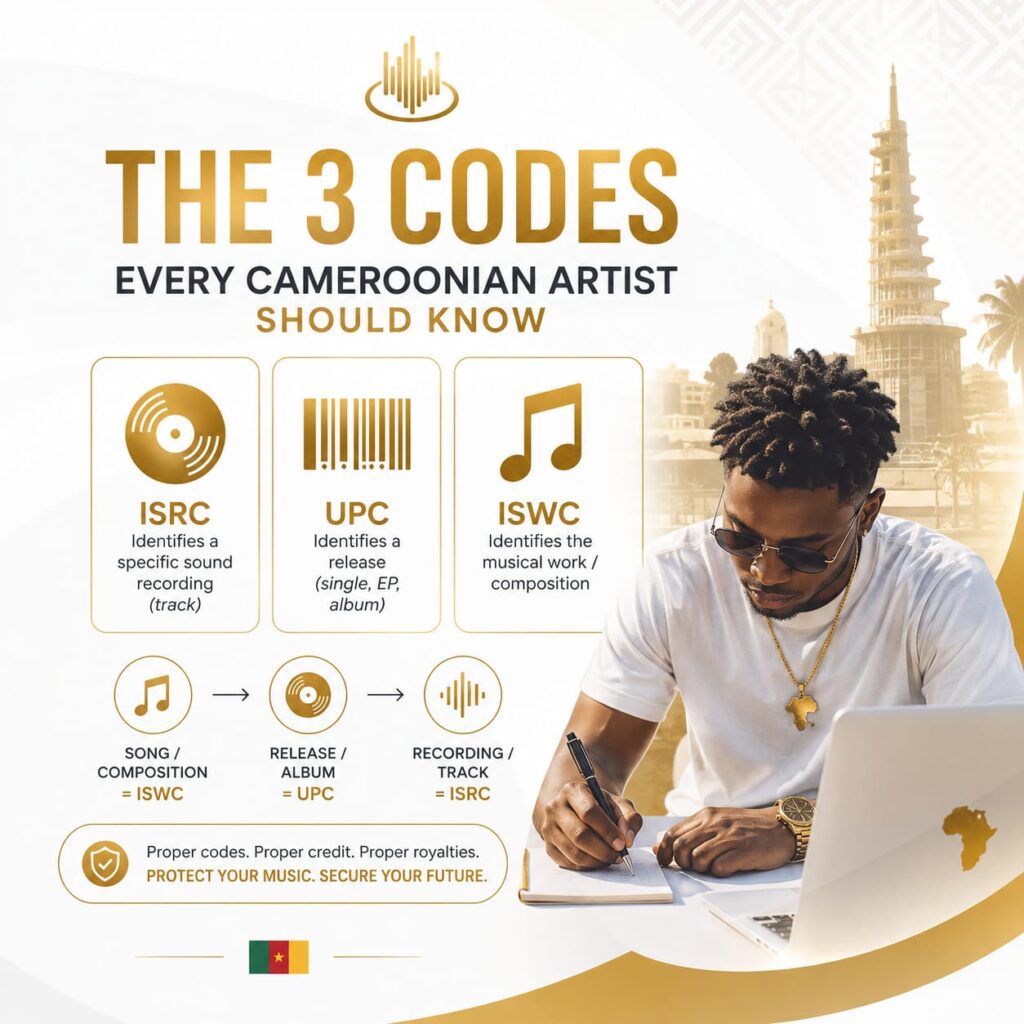
Behind every release on streaming platforms, there are three important codes working quietly in the background:
ISRC — This identifies a specific recording or track. Every version of a song has its own ISRC. UPC — This identifies the release itself, whether it’s a single, EP, or album. ISWC — This identifies the composition, meaning the actual song you wrote, including the lyrics and melody.
Think of it like this:
The song you wrote = ISWC The recording you uploaded = ISRC The project or release package = UPC
For many artists, producers, managers, and rights holders in Cameroon, missing royalties often comes down to something simple: incomplete or incorrect metadata. A song can perform well online and still fail to pay out properly if the information behind it is not correctly registered.
As Cameroon’s music scene keeps growing and reaching wider audiences, understanding ISRC, UPC, and ISWC is no longer just industry knowledge for labels and publishers. It is essential for every serious artist who wants their music to be properly protected and monetized.
Cameroon artists, managers, and music professionals: which of these three codes causes the most confusion for you? The ISRC, UPC, or ISWC?
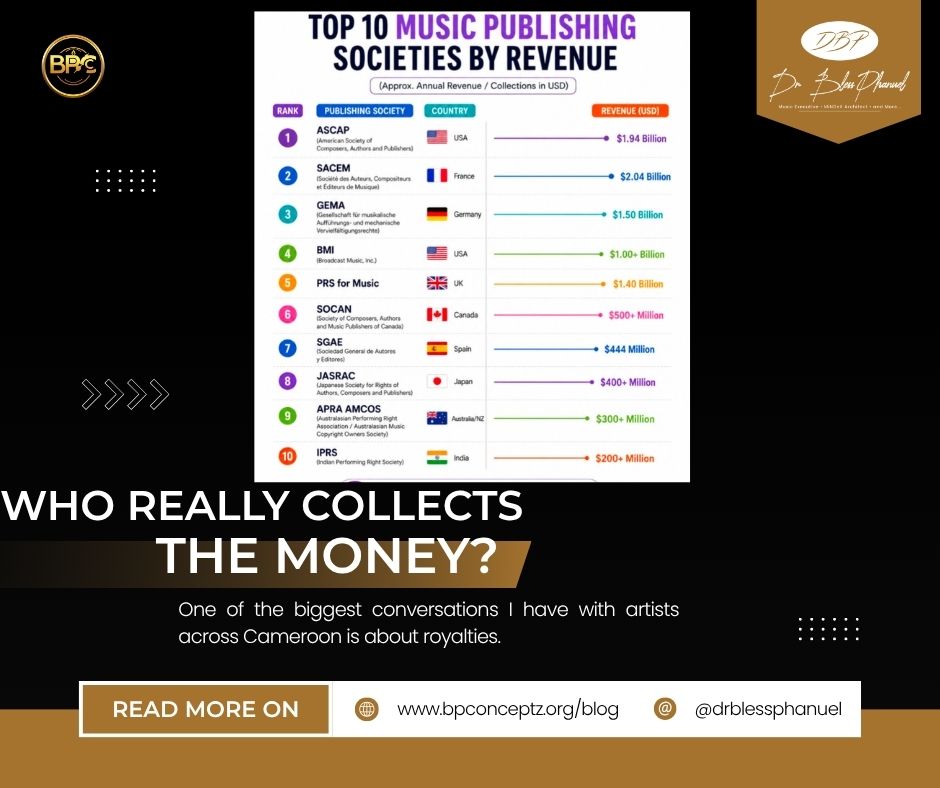
One of the biggest conversations I have with artists across Cameroon is about royalties.
An artist releases a song, gets thousands of streams, hears the song on radio, performs it at events, sees it circulating online, and then asks a simple question:
“Where is the money?”
The truth is that the global music industry runs on a system that many African artists still do not fully understand.
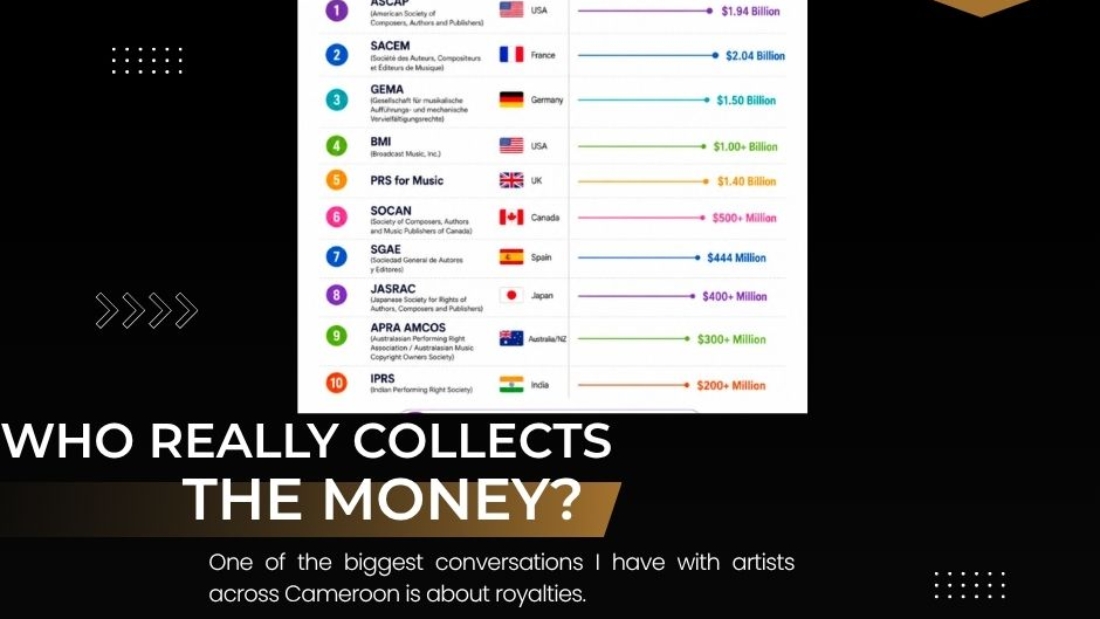
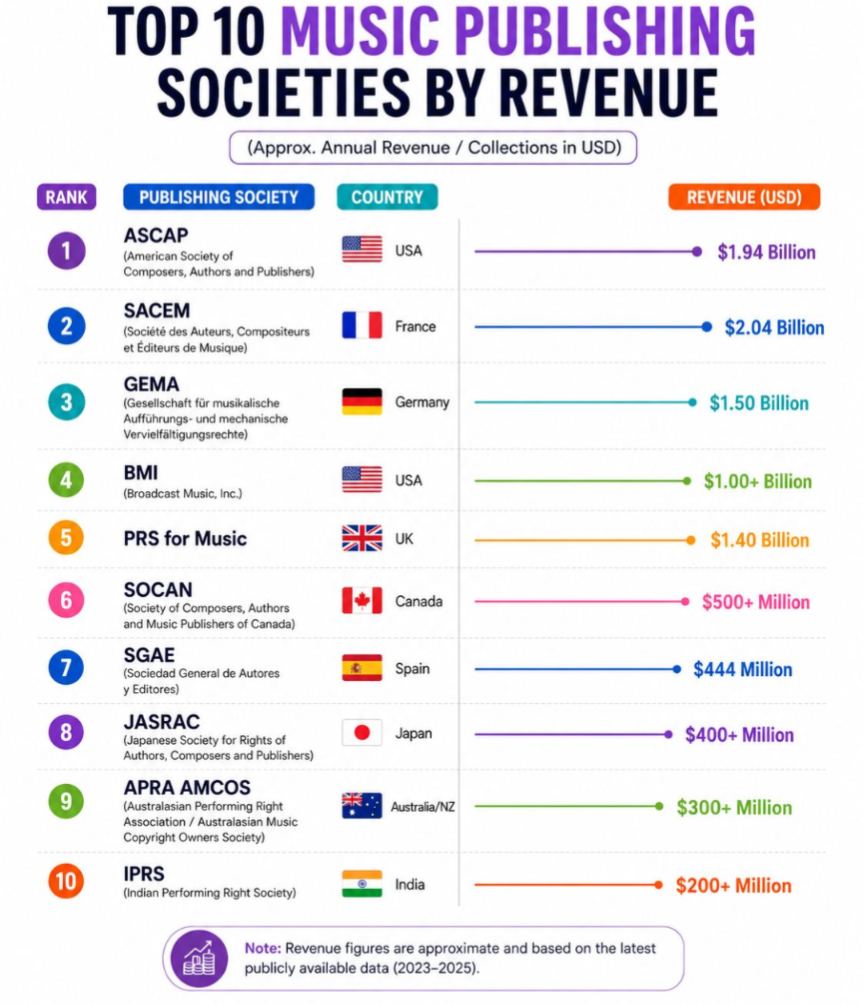
Behind every stream, broadcast, public performance, and license is a network of publishing societies and collective management organizations responsible for collecting and distributing royalties to songwriters, composers, and publishers.
Organizations such as ASCAP and BMI in the United States, SACEM in France, GEMA in Germany, PRS for Music in the United Kingdom, and IPRS in India collect billions every year on behalf of rights holders.
Yet many artists in our part of the world focus only on recording and releasing music without understanding the systems that generate long term income.
In many cases, artists are not poor because their music is not making money. They are losing money because they are disconnected from the structures that collect it.
As the music industry becomes increasingly digital, knowledge of publishing, copyright, neighboring rights, royalty collection, and music administration is becoming just as important as talent.
The artist who understands the business side of music has a significant advantage over the artist who focuses only on the creative side.
This is why I continue to advocate for music business education across Cameroon and Francophone Africa. We cannot build sustainable careers if we do not understand how value is created, tracked, collected, and distributed.
The future of African music will not only be shaped by great songs. It will also be shaped by creators who understand ownership, rights, and monetization.
The question is no longer whether your music can generate revenue.
The question is whether you understand where that revenue comes from and how to claim it.
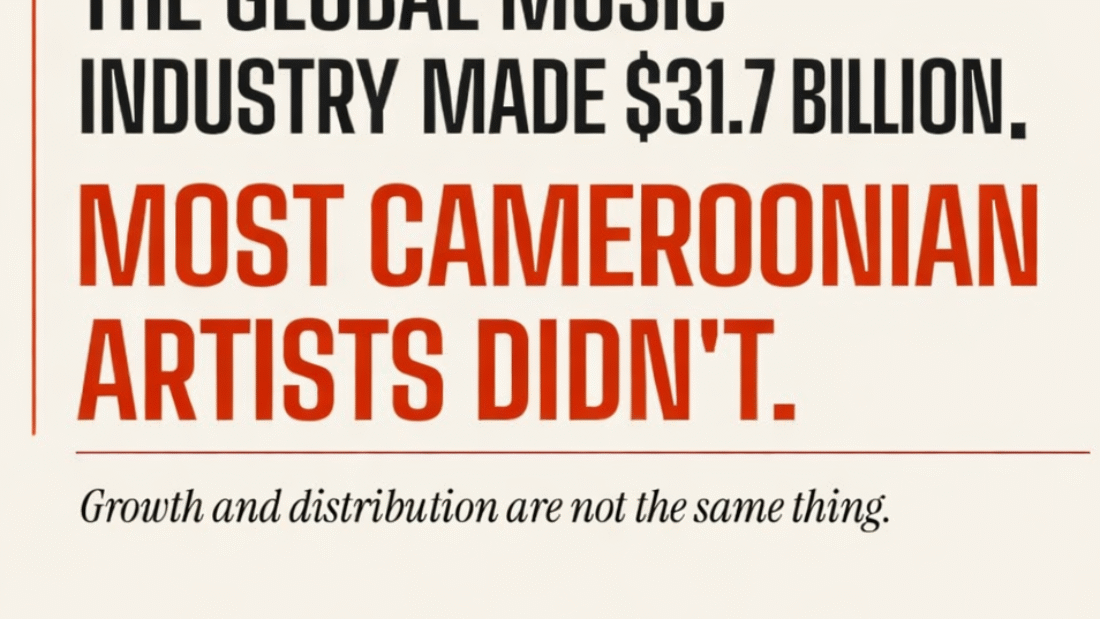
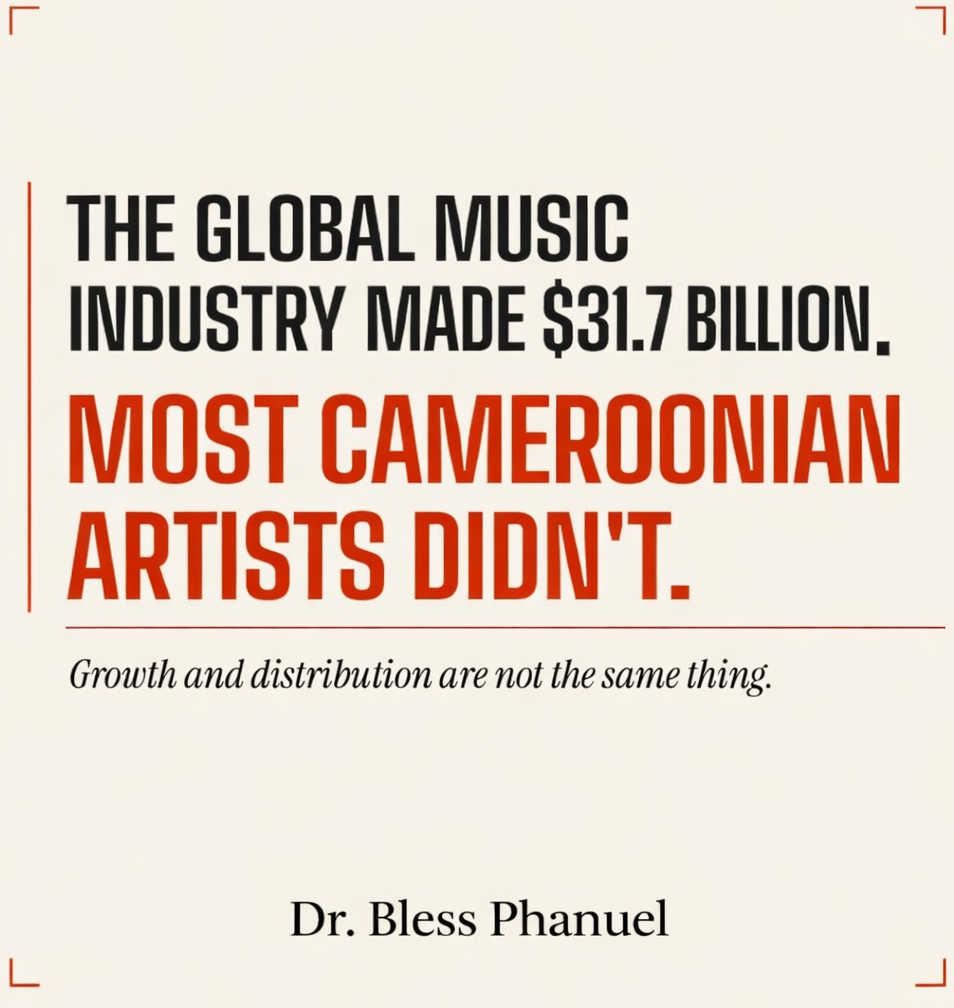
Last year, the global music industry generated approximately $31.7 billion in revenue.
At the same time, many artists around the world earned less than half a cent per stream from major streaming platforms.
Both statements are true.
And nowhere is this contradiction more visible than in emerging music markets like Cameroon.
Every year, headlines celebrate the growth of the music business. Streaming numbers are rising. Afrobeats is going global. African artists are getting international recognition. Major labels are expanding into Africa. The industry looks healthy from the outside.
But growth and distribution are two very different things.
The money entering the global music industry is not flowing equally to everyone participating in it. Most of the revenue moves toward the companies that control infrastructure, ownership, and distribution.
In simple terms: The people who own the system often make more money than the people creating the music.
The Reality Behind the Numbers
According to IFPI’s Global Music Report, recorded music revenues surpassed $31 billion globally in 2023, driven mainly by paid streaming subscriptions.
Spotify alone generated over €13 billion in annual revenue recently, with more than 600 million active users globally.
Yet many independent artists still struggle to survive financially from streaming income alone.
Why?
Because streaming economics heavily favor scale, ownership, and catalog control.
On average, Spotify pays between $0.003 and $0.005 per stream before royalties are divided among labels, distributors, publishers, managers, producers, and collaborators.
That means: 1 million streams may generate roughly $3,000 to $5,000 before splits and deductions.
For many independent African artists, even reaching one million streams consistently is already difficult.
Now imagine how small the final payout becomes after everyone in the chain takes their percentage.
The Cameroonian Reality Is Even More Difficult
In Cameroon, the monetization challenge is much deeper than streaming payouts alone.
The local music ecosystem still lacks strong monetization infrastructure.
Many artists are creating music, but very few are truly building sustainable music businesses.
Several major problems continue to affect the industry:
Limited royalty collection systems Weak publishing structures Low streaming penetration locally Poor copyright enforcement Lack of performance royalty transparency Limited sync licensing opportunities Few large scale investors in music infrastructure Low concert ticket purchasing culture Heavy dependence on free consumption
Many listeners consume music daily through WhatsApp shares, Bluetooth transfers, TikTok clips, YouTube reposts, or pirated downloads without any direct monetization reaching the artist.
This means that even popular songs may generate cultural impact without generating meaningful financial returns.
The Industry Rewards Infrastructure, Not Just Creativity
One difficult truth many artists avoid discussing is this:
The modern music industry was designed to reward ownership and infrastructure more than creation itself.
Labels own masters. Publishers control catalogs. Streaming platforms control audience access. Distributors manage delivery systems.
The artist, unless they own their rights, often becomes a participant inside someone else’s business structure.
This is why major labels and catalog owners continue generating enormous wealth even while many creators struggle financially.
A single successful catalog can generate recurring revenue for decades.
That is why companies like Sony, Universal, and Warner are spending billions acquiring music rights globally.
They understand something many artists still overlook: Ownership is the real long-term asset.
In Cameroon, Many Artists Focus on Visibility Before Ownership
A major challenge within the Cameroonian music industry is that many artists enter music chasing visibility before understanding business structure.
The conversations usually focus on: How to trend How to go viral How to get signed How to gain followers How to shoot better videos
All these things matter.
But very few conversations focus on: Publishing Master ownership Royalty systems Metadata management Licensing Catalog valuation Long-term rights ownership
As a result, many artists optimize for short-term attention instead of long-term financial sustainability.
Streaming Alone Cannot Save Most Cameroonian Artists
Even globally, streaming revenue alone only works significantly at very large scale.
For many Cameroonian artists, sustainable income will likely require combining multiple revenue streams such as:
Live performances Brand partnerships Merchandise YouTube monetization Publishing royalties International collaborations Licensing opportunities Fan communities Direct-to-fan sales Digital content businesses
The problem is that many artists are entering the industry without understanding how these systems work together.
The Knowledge Gap Is Still One of the Biggest Problems
Cameroon has talent. That has never been the issue.
The bigger problem is the lack of industry education and structural understanding.
Many artists still do not fully understand: Who owns what How royalties flow How contracts work How publishing works How global distribution systems operate How catalogs gain value over time
Without this knowledge, artists often sign away rights too early or build careers without ownership foundations.
And in a digital economy, ownership matters more than ever.
The Bigger Conversation Africa Needs
Africa’s music industry is growing rapidly, but growth alone does not guarantee creator wealth.
If African artists and executives do not build stronger ownership structures locally, much of the long-term value created by African music may eventually be controlled externally by foreign companies, investors, and catalog acquisition firms.
The global industry already understands the future value of music rights.
The question is whether African creators understand it too.
Final Thought
The global music industry may be generating billions, but that does not automatically mean artists are financially thriving.
Especially in Cameroon, the issue is not only talent or even audience attention.
The deeper challenge is monetization structure, ownership, and industry education.
Understanding how the system works may not change it overnight.
But it changes what artists choose to optimize for.
And in today’s music business, what you own may matter more than how famous you are.
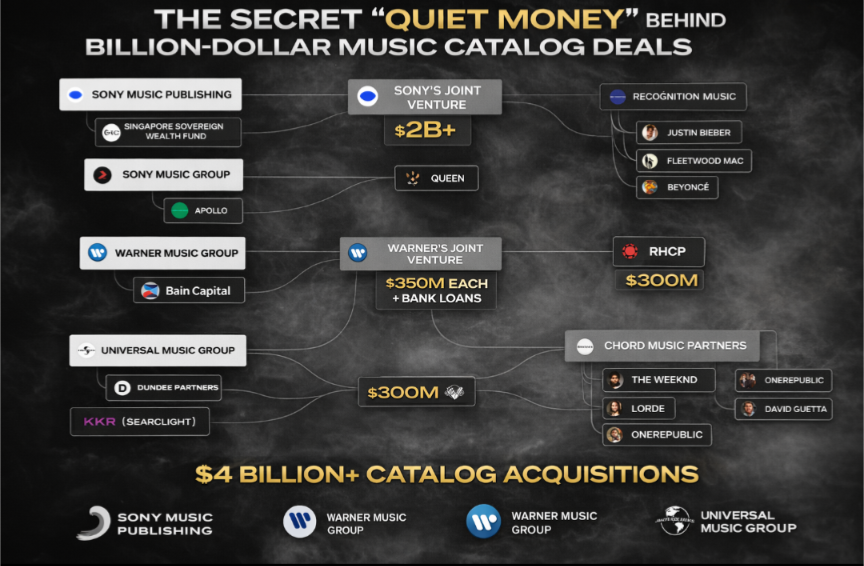
When headlines announce that Sony, Universal, or Warner Music just acquired a music catalog worth hundreds of millions or even billions of dollars, most people assume the labels are spending their own cash.
But that is no longer the full story.
Behind many of today’s biggest music acquisitions is something the public rarely sees: quiet institutional money from sovereign wealth funds, private equity firms, pension-backed investors, insurance capital, and Wall Street financing structures.
The modern music catalog boom is no longer driven by record labels alone. It is increasingly powered by global finance.
And the numbers behind these deals are enormous.
Music Catalogs Have Become Billion-Dollar Financial Assets
Over the past five years, music catalogs have evolved into one of the hottest alternative investment assets in the world.
Why?
Because songs generate recurring long-term income through: Streaming royalties Publishing royalties Performance rights YouTube monetization Sync licensing for movies, games, TV, and advertising Social media usage Radio airplay
A successful song can continue generating revenue for 30, 40, or even 50 years.
According to Goldman Sachs, the global music industry is projected to surpass $45 billion in annual revenue before the end of the decade, with streaming remaining the dominant driver of growth.
Spotify alone paid out more than $10 billion to the music industry in a single year, showing why institutional investors now view music rights as predictable long-term cash-flow assets.
The result? Wall Street entered the music business aggressively.
The Real Playbook Behind These Deals
Most major catalog acquisitions now follow a similar structure.
The investment firm provides the capital. The music company provides industry expertise, relationships, administration, licensing, and operational management.
Together, they acquire catalogs and split revenues over time.
The public sees “Sony bought the catalog.” But behind the scenes, the financing often comes from giant investment firms.
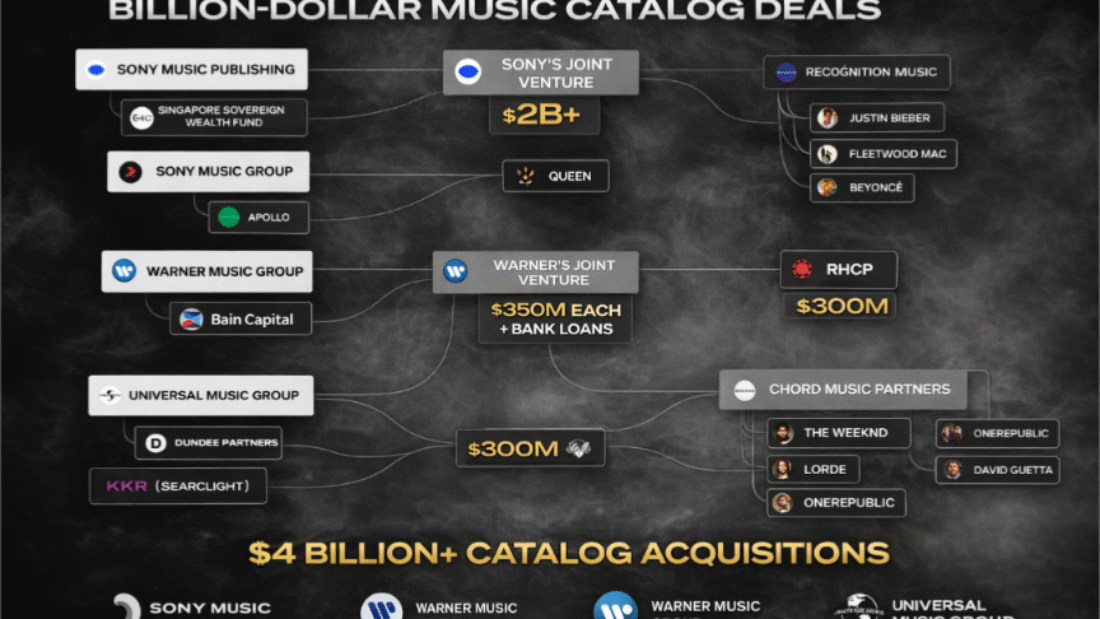
Sony Music Publishing + Singapore’s Sovereign Wealth Fund (GIC)
One of the clearest examples is Sony Music’s partnership with Singapore’s sovereign wealth fund, GIC.
The partnership was created specifically to acquire premium music catalogs globally.
Reports indicate that GIC committed more than $2 billion toward music rights acquisitions alongside Sony. GIC itself manages an estimated portfolio worth more than $700 billion globally across multiple industries.
Sony contributes: Global publishing expertise Catalog administration Licensing infrastructure Industry relationships
GIC contributes: Massive institutional capital.
This allows Sony to pursue billion-dollar acquisitions without using only its own balance sheet.
Recent reports linked this structure to Sony’s reported acquisition activity involving catalogs valued between $3.5 billion and $4 billion.
Sony Music Group + Apollo Global Management
Sony also partnered with Apollo Global Management, one of the largest private equity and alternative asset firms in the world.
In 2024, Apollo announced a $700 million capital solution for Sony Music Group specifically to support investments in the music industry.
Apollo manages hundreds of billions in assets globally and viewed music rights as a strong alternative investment category due to stable streaming revenues.
This partnership reportedly helped support Sony’s broader acquisition ambitions, including activity around iconic catalogs like Queen and Pink Floyd.
The Queen catalog alone has reportedly been valued near or above $1 billion, while Sony’s Pink Floyd acquisition discussions were estimated around $400 million to $500 million.
This shows how modern music acquisitions increasingly resemble private equity transactions more than traditional record label deals.
Warner Music Group + Bain Capital
Warner Music Group took a similar route by partnering with Bain Capital.
In 2025, Warner and Bain announced a joint venture capable of investing up to $1.2 billion into legendary music catalogs. Both parties contributed equal equity commitments while also leveraging financing from banks such as Goldman Sachs and Fifth Third Bank.
Warner handles: Marketing Distribution Catalog administration Industry operations
Bain provides: Private equity capital Financial structuring Institutional investment resources
One of the first major targets linked to the venture was the Red Hot Chili Peppers catalog, reportedly valued at more than $300 million.
This demonstrates how catalog acquisitions are now being financed similarly to corporate buyouts.
Universal Music + Chord Music Partners
Universal Music Group has also aligned itself with large-scale catalog acquisition structures.
Chord Music Partners was built specifically to acquire music rights using billions raised from institutional and private equity-backed financing.
Universal’s role extends beyond ownership. The company provides: Catalog management Licensing Distribution Royalty optimization Global monetization infrastructure
This partnership model allows financial investors to participate in music ownership while relying on Universal’s expertise to maximize long-term returns.
Why Investors Suddenly Love Music
Streaming Made Revenues Predictable
Before streaming, music revenues were highly volatile because they depended heavily on physical sales.
Streaming changed everything.
Platforms like Spotify, Apple Music, YouTube Music, TikTok, and Amazon Music created recurring monthly consumption patterns.
Today, investors can forecast streaming performance almost like subscription-based technology businesses.
This predictability made music attractive to private equity firms.
Music Became “Recession Resistant”
During economic downturns, people still listen to music.
Even during COVID-19, streaming consumption remained strong globally.
That stability convinced investors that music rights could behave like defensive long-term assets similar to infrastructure or real estate.
Intellectual Property Became the New Oil
In the digital economy, ownership matters more than ever.
Music catalogs are intellectual property assets capable of generating revenue globally without manufacturing physical products.
This is why firms like: Blackstone Apollo KKR Bain Capital BlackRock-linked funds Insurance-backed investment groups
have all entered the music rights market aggressively.
In many ways, the future battle is no longer only about artists. It is about ownership.
The Numbers Behind the Catalog Boom
Some of the industry’s biggest catalog transactions include:
Bob Dylan’s catalog reportedly sold for approximately $300 million to Universal Music.
Bruce Springsteen’s catalog reportedly sold for around $500 million to Sony.
Michael Jackson-related catalog assets were reportedly valued above $1.2 billion in Sony-related transactions.
David Bowie’s catalog reportedly sold for around $250 million.
Neil Young’s catalog transactions reportedly exceeded $150 million.
Queen’s catalog discussions reportedly approached or exceeded $1 billion.
These numbers explain why institutional investors now view music as a serious financial market.
What African Artists Should Learn From This
For African artists, this trend carries a major lesson.
Many artists still focus only on advances, quick payouts, and short-term visibility.
But globally, the real wealth is increasingly being built through ownership of masters, publishing rights, and catalogs.
A song is no longer just entertainment. It is an asset.
This is especially important as African music continues growing internationally.
Afrobeats, Amapiano, Francophone African music, and other regional genres are expanding rapidly across streaming platforms.
The danger is that many African creators may undervalue their rights today without realizing how valuable catalogs could become in the future.
The Bigger Reality
The global music industry is quietly undergoing financial transformation.
What appears publicly as a “music company acquisition” is often actually a partnership between entertainment corporations and global finance institutions.
The labels provide expertise. Wall Street provides the capital.
The public sees the headlines. But the real engine behind today’s billion-dollar catalog boom is quiet money.
And this silent shift may completely redefine the future ownership structure of the global music business.
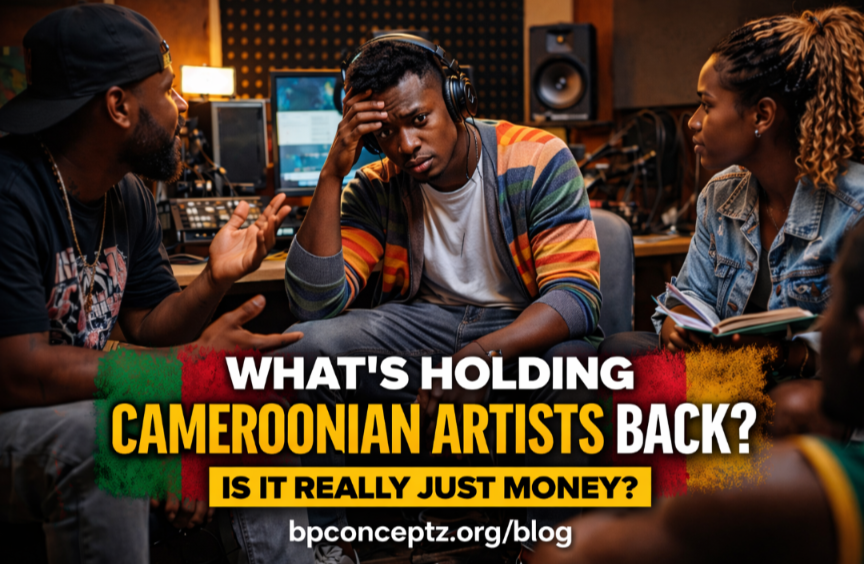
Whenever artists are asked about their biggest challenge, the answer is almost always the same: money. Many believe that if they had enough financial support, their careers would automatically take off.
But looking closely at the Cameroonian music industry today, it becomes obvious that money is not always the real issue. In many cases, the deeper problem is the lack of structure, direction, and proper understanding of the music business.
The Biggest Problem Most Artists Face in Cameroon Is Not Money
Cameroon is full of talented artists. Every day, new voices emerge with incredible creativity and potential. Yet many of these artists struggle to grow, not because they lack talent, but because they enter the industry without preparation.
A lot of artists focus only on recording songs and shooting videos while ignoring the business side of music. They do not understand distribution, royalties, branding, marketing, audience building, networking, or release strategy. Some release music consistently but remain invisible because there is no clear structure behind their efforts.
This creates frustration.
Many artists eventually begin to blame the industry, the audience, bloggers, promoters, or even streaming platforms without first asking whether they truly understand how the industry works.
The reality is that music today is not just talent. Music is also business.
Before releasing music professionally, artists should learn at least the basics of the industry. Understanding how to position a brand, promote a release, build a fanbase, and manage opportunities can make a huge difference, even with limited resources.
In Cameroon especially, many artists are waiting for sponsors, investors, or overnight breakthroughs while neglecting personal development and industry education. Yet knowledge is what helps artists make smart decisions with the little resources they already have.
Money is important, yes. But money without structure often disappears without results. We have seen artists invest heavily into projects that create temporary noise but no long term impact because there was no proper strategy behind the investment.
The artists who survive and grow are not always the most talented. In many cases, they are the most informed, disciplined, and intentional.
Cameroon has enough talent to compete globally. What the industry needs now is more structure, more education, and more artists who understand that building a music career requires both creativity and strategy.
The conversation is important because solving the problems of the Cameroonian music industry will require honesty and collective reflection.
Do you think money is truly the biggest challenge artists face in Cameroon, or is the real issue lack of knowledge, structure, and industry understanding?
One of the biggest problems in Cameroon’s music industry today is that many artists, producers, and songwriters still do not fully understand what they actually own after creating a song.
Because of this, many creatives lose royalties, publishing income, master ownership, and long-term revenue opportunities simply because they sign agreements they do not fully understand.
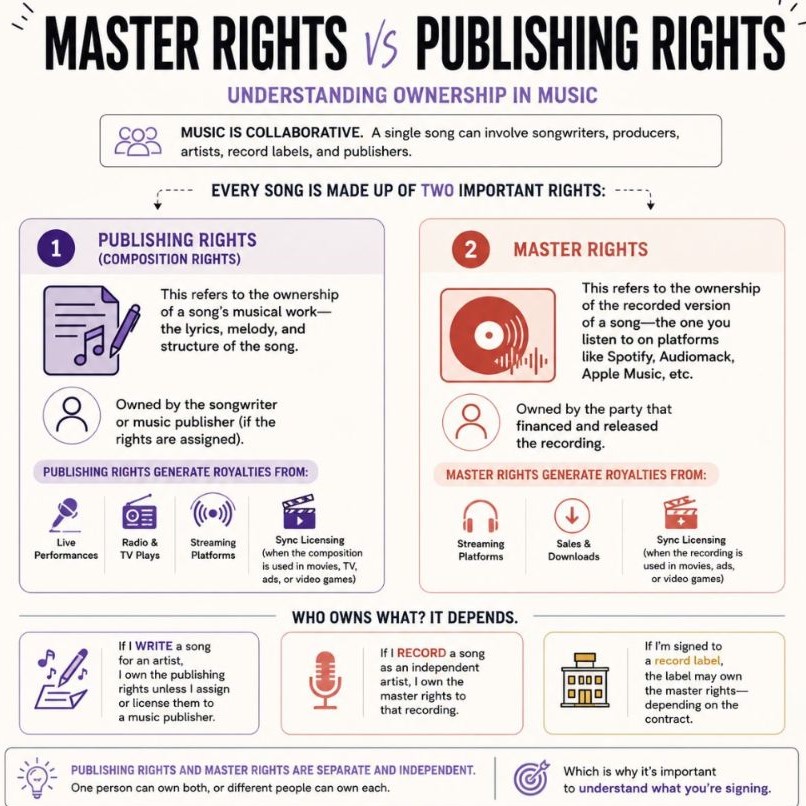
Music ownership is not always simple because music is collaborative. A single song can involve songwriters, producers, artists, labels, publishers, distributors, and engineers.
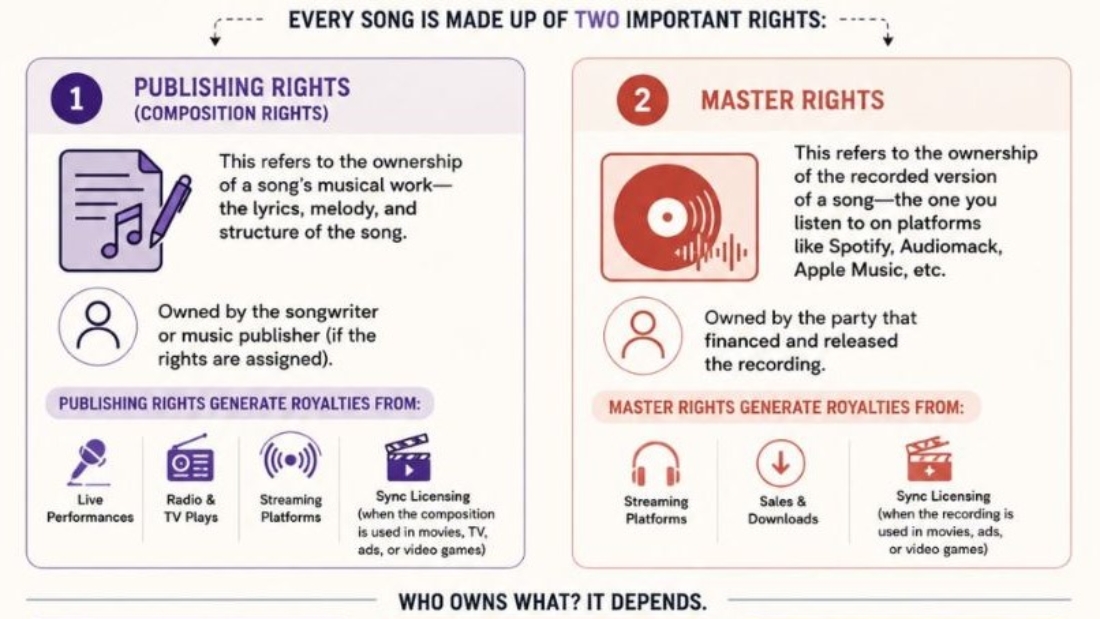
Every commercially released song is built around two major rights:
Publishing Rights
Publishing rights relate to the musical composition itself:
Lyrics
Melody
Songwriting structure
These rights usually belong to the songwriter or publisher and generate royalties from radio plays, streaming platforms, TV broadcasts, live performances, and licensing.
Master Rights
Master rights relate to the final recorded version of the song heard on Spotify, Apple Music, Audiomack, Boomplay, and YouTube.
The owner of the master controls how the recording is distributed, monetized, and licensed commercially.
Master rights generate income from streaming revenue, digital sales, YouTube monetization, and sync licensing.
One important thing every creative in Cameroon must understand is this:
Publishing rights and master rights are completely different rights.
You can own one without owning the other.
This is why understanding contracts before signing them is extremely important.
Many creatives across Cameroon are still signing deals without fully understanding:
What rights they are giving away
What royalties they deserve
What ownership they are keeping long-term
As Cameroon’s music industry continues to grow, music business education and rights awareness will become more important than ever.
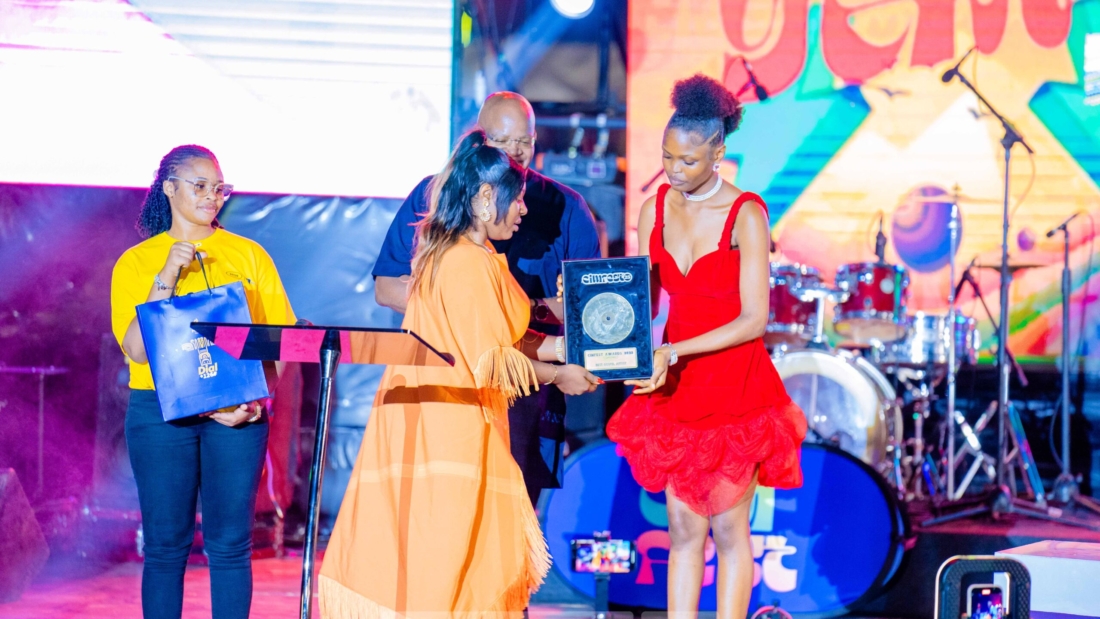
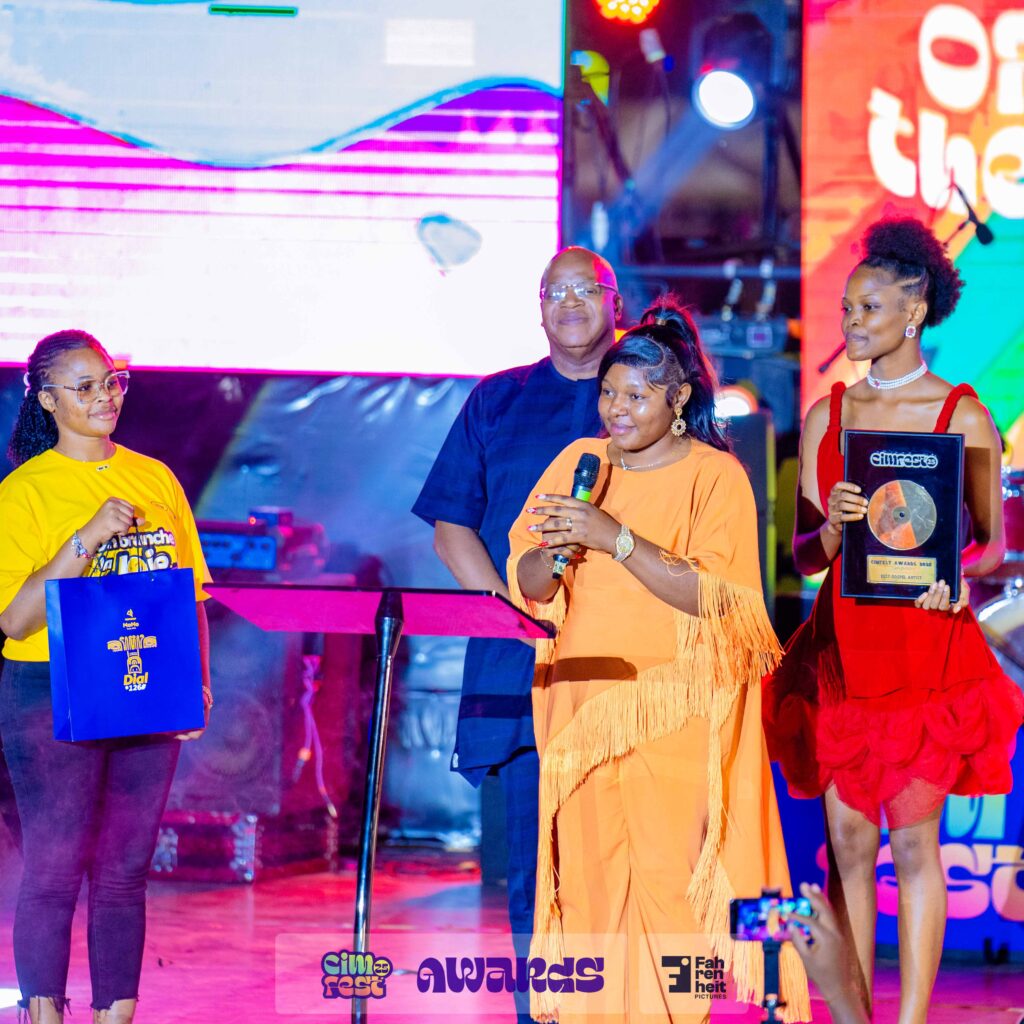
Buea, Cameroon – On a historic night at the Molyko Omnisport Stadium — packed with more than 20,000 electrified music lovers — KV Official ascended into the spotlight as she was crowned Best Gospel Artist at the CIMFEST Awards 2025.
What unfolded was more than an award ceremony; it was the formal recognition of a young woman whose voice, message, and spiritual fire are reshaping the landscape of Cameroonian Gospel music.
At a festival built around The Vibe of the Year, KV Official delivered not just a vibe — but a cultural moment.
A Victory Years in the Making
When KV Official stepped onto the CIMFEST stage, it was clear that the crowd already knew. They had streamed her songs, shared her lyrics, played her album in their homes, churches, and prayer rooms.
Her victory felt inevitable — not because it was predictable, but because it was deserved.
Winning Best Gospel Artist is the culmination of a journey that began far from stadium lights. Raised in Bamenda, shaped in church choirs, and refined through years of discipline and divine encounters, KV Official has become the voice many did not know they were waiting for — until they heard her.
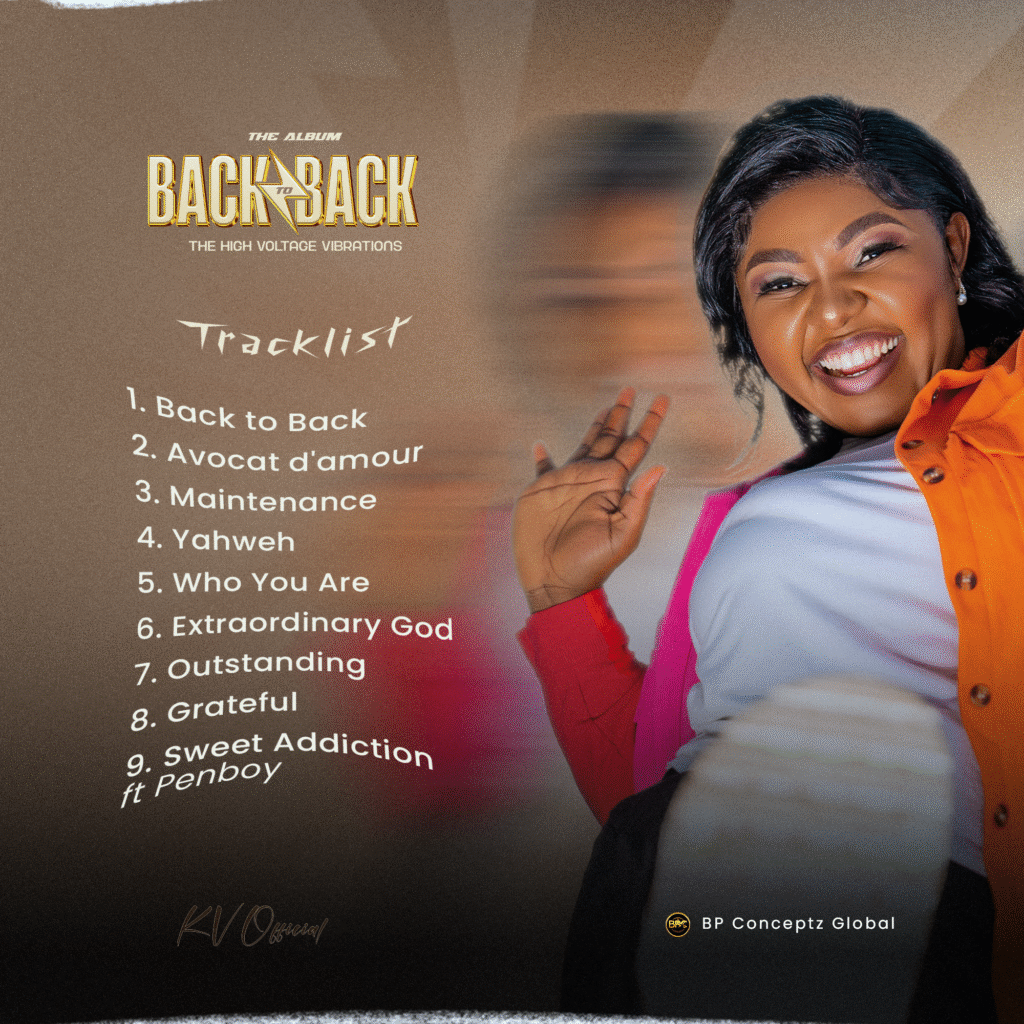
Her debut album, “Back to Back – The High Voltage Vibrations,” ignited a spiritual movement, reintroducing Gospel not as a genre, but as an experience.
An Album That Shifted the Atmosphere
Released under BP Conceptz Global, KV Official’s 9-track debut was a turning point for Gospel music in Cameroon. A fusion of Afrobeats, Amapiano, Highlife, soulful worship, and bilingual expression, it delivered a sound that was fresh yet deeply spiritual.
Each track — from “Extraordinary God” to “Who You Are” — pulsed with purpose. And listeners across the world felt it.
That global resonance propelled her to:
● The most streamed Cameroonian Gospel artist on Spotify in 2025 ● The second Cameroonian Gospel artist with the most global Spotify listeners ● The No. 1 Cameroonian Gospel artist on Apple Music in 2025
These aren’t just statistics. They are proof of impact.
A Message That Moves Beyond Music
What distinguishes KV Official is that her influence is not confined to studios or stages. Her music is built on ministry — and her ministry extends to action.
Through Back to Back CARES, she provides relief and support to orphans, widows, and internally displaced families. Her workshops empower young Gospel musicians, giving them the tools and confidence to pursue purpose with passion.
And soon, she will headline the Back to Back Peace Concert — a mission-driven event aimed at healing tensions, fostering unity, and restoring hope in a region longing for peace.
KV Official is not merely singing Gospel; she is living it.
A Cultural Reset for Cameroonian Gospel
Long overshadowed internationally, Cameroon’s Gospel scene is entering a new chapter — and KV Official is one of the artists leading the transition. Her global rise signals a shift:
Cameroonian Gospel is no longer waiting to be noticed. It is stepping boldly into the global conversation.
Her CIMFEST victory confirms her place among the architects of this change.
BP Conceptz Global: Curating Excellence, Shaping Futures
Behind this monumental rise is BP Conceptz Global, the nation’s premier Gospel music house. With a mission to elevate Gospel artistry to global standards, the label continues to champion voices that combine ministry, creativity, and professionalism.
KV Official is one of their finest ambassadors — and this award further validates the label’s commitment to excellence.
A Star on the Rise — And This Is Only the Beginning
From the pews of Bamenda to the roaring stadiums of CIMFEST, KV Official’s journey embodies faith, resilience, and purpose. Her music heals. Her story inspires. Her impact grows by the day.
As the lights dimmed on the 2025 CIMFEST Awards, one truth echoed across the Molyko Stadium:
KV Official is not just a winner — she is a force. And the world is finally catching on.
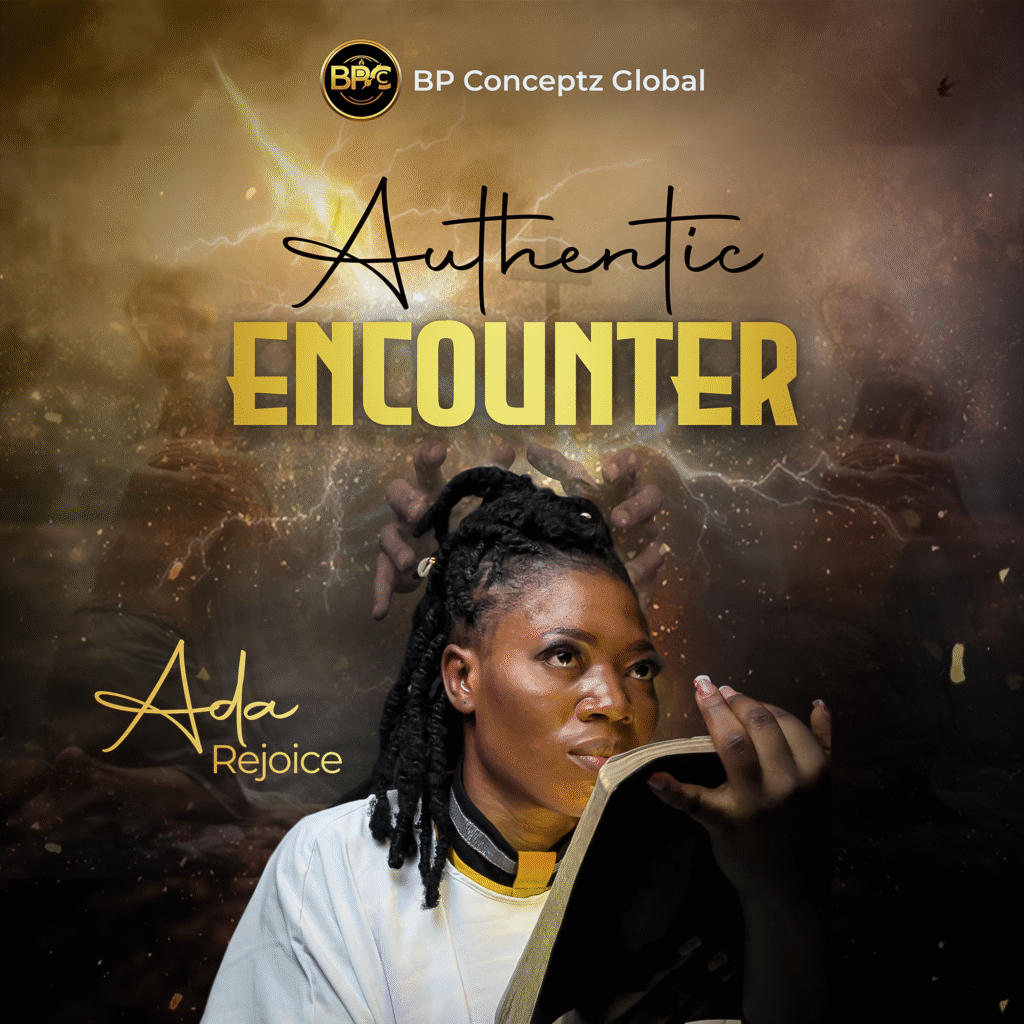
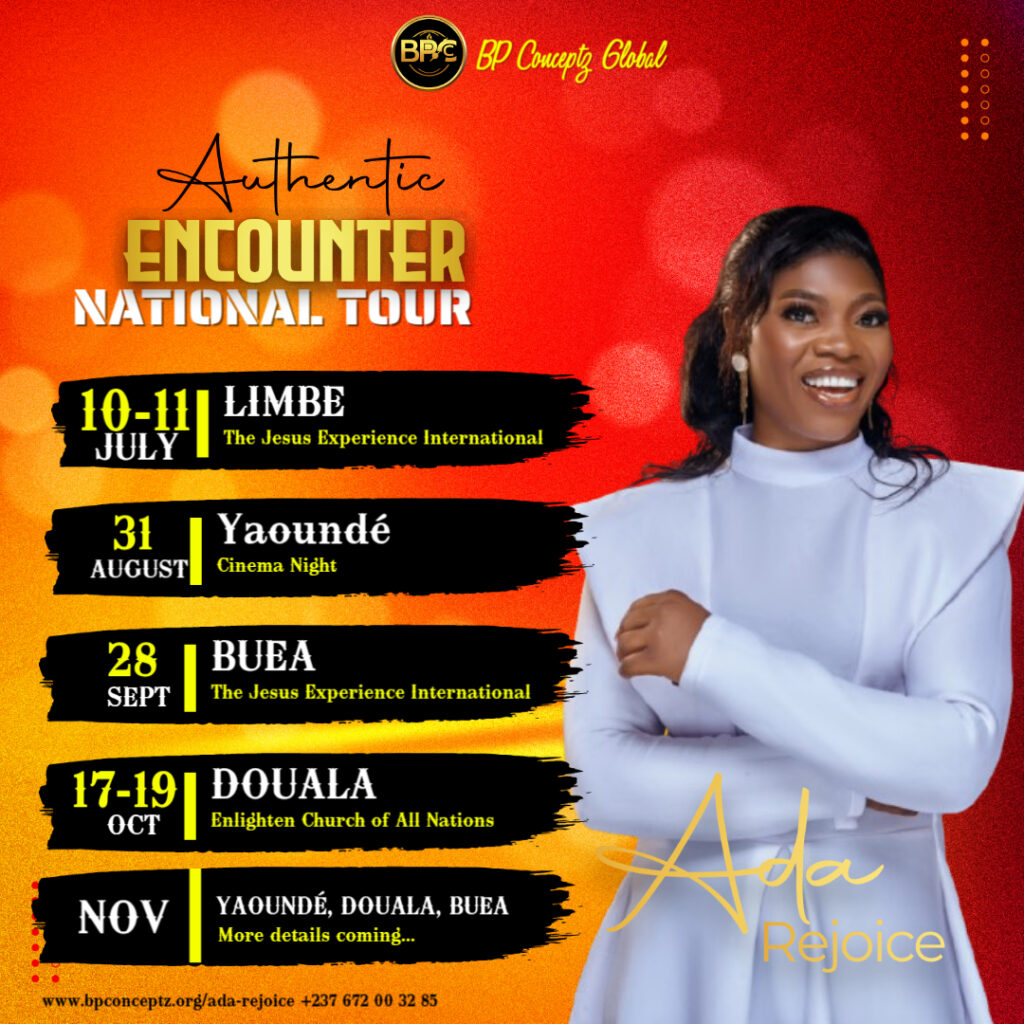
ADA REJOICE IGNITES CAMEROON WITH THE “AUTHENTIC ENCOUNTER” NATIONAL TOUR
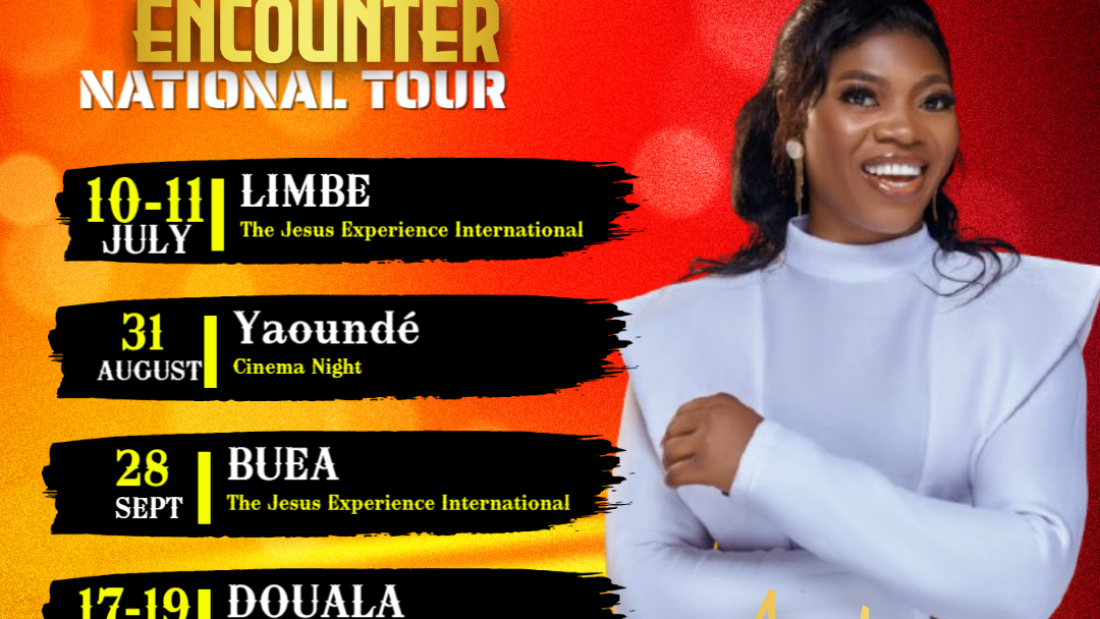
Cameroon is experiencing a fresh wave of gospel revival, and at the heart of it stands one name — Ada Rejoice. With her powerful voice, captivating presence, and unwavering passion for the Gospel, Ada Rejoice has been on a mission to light up hearts across the nation through her Authentic Encounter National Tour — a spiritual and musical journey that has taken her from the coastal city of Limbe to the bustling streets of Yaoundé and Douala.
Organized by BP Conceptz Global, the Authentic Encounter Tour has become one of the most talked-about gospel movements of the year, uniting thousands of worshippers in an atmosphere of praise, intimacy, and divine renewal.
A Journey of Worship and Fire
The tour officially kicked off on July 10–11 in Limbe, hosted by The Jesus Experience International. From the first note, Ada Rejoice set the tone for what would become a nationwide wave of worship. The Limbe sessions overflowed with energy — spontaneous worship, testimonies of healing, and a tangible sense of God’s presence that left many in tears of joy.
From there, the move of God spread to Yaoundé, where the Cinema Night Experience on August 31st offered something fresh — a creative blend of music, visuals, and storytelling that drew hundreds of young people into the message of hope and authenticity in Christ.
By the time the tour reached Buea on September 28th, at The Jesus Experience International once again, the response was electric. The Mountain City, known for its youthful spirit and creative energy, came alive with worshippers who filled the venue to capacity, lifting their voices as Ada Rejoice delivered songs of gratitude, revival, and restoration.
A Prophetic Sound in Douala
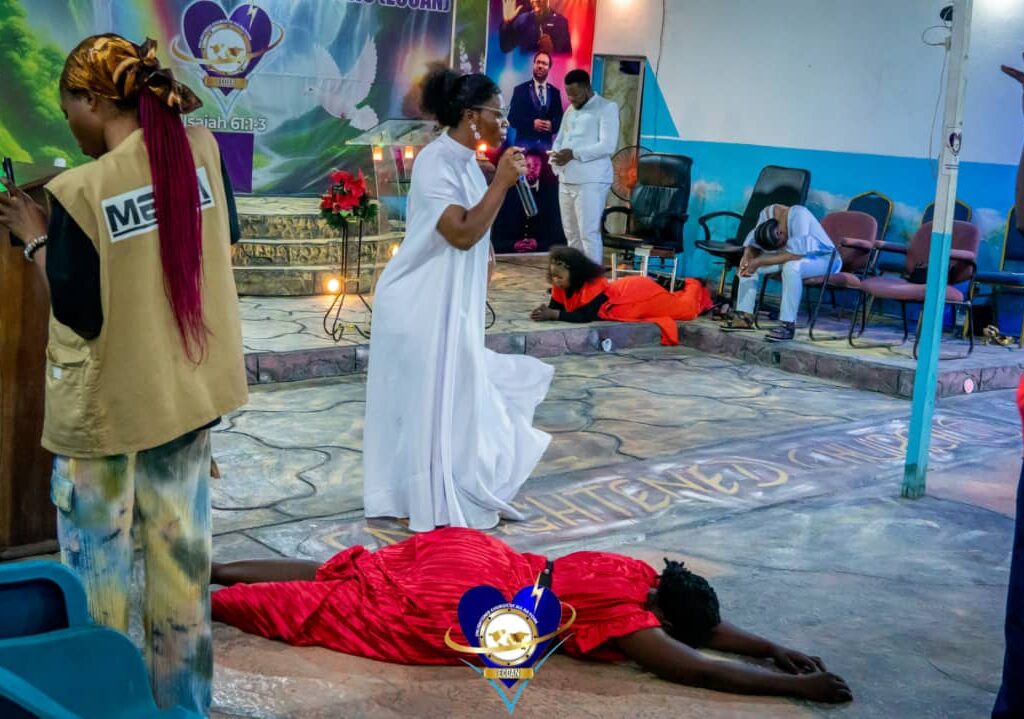
The tour’s most recent stop was in Douala, from October 17–19, at the Enlighten Church of All Nations (ECOAN) — led by Apostle Daniel Mbongchom. The three-day crusade themed “Unction to Function” witnessed a mighty outpouring of the Spirit. Ada Rejoice’s performances went beyond entertainment; they were encounters — moments of breakthrough for many attendees who testified of renewed faith, healing, and inspiration.
Her renditions of fan favorites like Extraordinary God, Who You Are, and Yahweh from her latest album Back to Back – The High Tension Vibrations created an atmosphere that many described as “heaven touching earth.”
What Makes the Authentic Encounter Tour Different
Unlike a conventional concert, Authentic Encounter is a hybrid of worship experience, outreach, and empowerment. Each stop on the tour is carefully curated to create an environment where people can worship freely, experience God’s power, and leave transformed.
Ada Rejoice describes the tour as “a divine assignment to remind believers that true worship is not a performance, but a heart-to-heart encounter with God.”
The production team from BP Conceptz Global has also set new standards in stage design, lighting, and sound for gospel events in Cameroon. Every venue has been transformed into a vibrant sanctuary of excellence — blending music ministry with visual storytelling to deliver a seamless worship experience.
Beyond Music – A Ministry of Impact
What truly sets Ada Rejoice apart is her heart for people. Beyond the stage lights and microphones, she has used the tour as an opportunity to reach out to local communities — especially young believers, choirs, and worship leaders — through mentorship sessions and prayer encounters.
Her message to the younger generation is clear: “You don’t have to wait for a perfect platform to serve God. Start where you are, and let your authenticity be your anointing.”
BP Conceptz Global’s vision aligns perfectly with this mission — empowering creatives, artists, and gospel ministers to take their craft and calling to the next level. Through the Authentic Encounter Tour, BP Conceptz is redefining what excellence in gospel music and event production looks like in Cameroon.
What’s Next: The Grand Finale
As the tour continues, more cities are gearing up for their turn. In November, the Authentic Encounter Tour will make return stops in Yaoundé, Douala, and Buea, promising even more surprises, new collaborations, and moments of worship that will mark the end of the tour in grand style.
Fans and worshippers are encouraged to stay connected through BP Conceptz Global’s official platforms for detailed updates and ticket information.
A Revival in Motion
The success of Ada Rejoice’s tour is a reflection of a greater move happening in the Cameroonian gospel scene — a rise of bold, Spirit-filled artists who are blending artistry with purpose. Through songs that carry both power and passion, Ada Rejoice is leading that charge, reminding the nation that gospel music is not just about melody — it’s a movement of hearts turned toward God.
As the Authentic Encounter Tour continues, one thing is certain: Cameroon has not just witnessed concerts — it has witnessed encounters that will echo for years to come.
KV Official Electrifies the Gospel Scene with Her Debut Album “Back to Back – The High Voltage Vibrations”
In a bold and defining move for Cameroon’s contemporary Gospel landscape, KV Official, the fast-rising artist under BP Conceptz Global, has released her debut studio album titled “Back to Back – The High Voltage Vibrations.” The project marks not only her entry into the industry’s mainstream conversation but also a clear declaration of her artistic identity — fusing spirituality, culture, and rhythm into one powerful experience.
A New Voice with a Global Sound
Born Karen Victory, KV Official represents a new wave of African Gospel artistry — one that refuses to be confined by traditional boundaries. Her sound is a refreshing blend of Afrobeats, Amapiano, Highlife, and Gospel Soul, delivered in both English and French, making her one of the few Cameroonian artists with truly bilingual appeal.
Raised in Bamenda, KV’s journey into music began at a tender age through church choirs and children’s ministry programs. What started as youthful passion evolved into a divine calling. A pivotal spiritual encounter in 2019 transformed her creative direction and set her on a mission to create music that ministers, heals, and uplifts.
By 2022, KV Official signed to BP Conceptz Global, Cameroon’s premium Gospel record label, marking the start of her professional career. With a firm foundation of faith, education, and discipline — including training in Secretarial Administration and Medical Personnel Studies — she brings both excellence and authenticity to her craft.
About the Album: “Back to Back – The High Voltage Vibrations”
“Back to Back” is more than an album; it is a musical movement. Comprising nine tracks across multiple genres, the album represents a surge of divine energy — “back-to-back” hits charged with faith, rhythm, and life. Each song carries what KV describes as “The High Voltage Vibrations” — a spiritual current meant to awaken listeners to joy, gratitude, and purpose.
Thematically, the album navigates between celebration and reflection, drawing listeners into a journey of worship and inspiration. Songs like “Grateful,” “Extraordinary God,” and “Outstanding” showcase KV’s vocal range and songwriting depth, while “Who You Are” stands out as an anthem of empowerment and self-awareness. The album’s collaborative piece, “Sweet Addiction” featuring Penboy, blends Afro-Gospel flair with urban sophistication, offering a glimpse into KV’s versatility.
Musically, Back to Back merges Afrobeat rhythms, Amapiano grooves, and Gospel soul melodies, capturing both the heart of African expression and the modern global sound. It’s a production that balances energy and spirituality — music for both worship and the streets.
The Mission Behind the Music
At the core of the album lies a vision that transcends entertainment. Through her music, KV Official seeks to inspire transformation and healing — a message that resonates deeply in a time when many are seeking hope and direction.
As part of her campaign, she launched “Back to Back CARES,” a community initiative dedicated to supporting orphans, widows, and internally displaced families. The program provides food supplies, essentials, and emotional support, and partners with local churches to conduct free Gospel music workshops for youth and aspiring artists.
This humanitarian extension of her album underscores her belief that music must serve both God and people. In her words, “It’s not just about the songs; it’s about the souls they reach.”
The Peace Concert – Healing Through Sound
To reinforce the album’s mission, KV Official will headline The Back to Back Peace Concert in Buea, Cameroon, an event designed to promote unity and reconciliation in the Southwest Region. The concert will feature guest artists from both Anglophone and Francophone backgrounds and will be free for young people, internally displaced persons (IDPs), and local families.
Through this event, KV Official aims to demonstrate that Gospel music can be a force for national healing, blending art with advocacy for peace and social cohesion.
A Growing Influence in Gospel Music
Since her debut, KV Official’s releases have shown consistent growth in both creativity and reach. Songs such as “Grateful” and “Extraordinary God” positioned her as a dynamic voice in Cameroon’s Gospel music scene, while “Outstanding” and “Who You Are” elevated her as an artist who blends faith with empowerment.
Her stage presence, bilingual delivery, and relatable storytelling connect her to a diverse audience — from youth and urban millennials to seasoned believers seeking inspiration through fresh sounds.
With her nomination for Best Gospel Artist at the CIMFEST Awards 2025, KV Official has cemented her place among Cameroon’s leading Gospel acts. The recognition not only celebrates her artistry but also signals a new era for Gospel representation at the country’s largest musical festival.
BP Conceptz Global: Championing a New Gospel Culture
The success of Back to Back also reflects the vision of BP Conceptz Global, the label behind KV Official. Known as Cameroon’s premier Gospel music company, BP Conceptz has consistently positioned itself as a catalyst for Gospel innovation and excellence. The label continues to nurture artists who embody purpose, professionalism, and global appeal, bridging the gap between ministry and mainstream success.
Partnerships and Media Engagement
BP Conceptz Global invites radio stations, television networks, blogs, and digital media outlets to partner in amplifying the reach of Back to Back – The High Voltage Vibrations. The partnership package offers exclusive access to interviews, airplay materials, promotional content, and official media partner branding.
Through this collaboration, the label seeks to unite media and ministry under a shared vision — to showcase the beauty and power of Gospel music made in Cameroon.
Conclusion: The Sound of a New Generation
Back to Back – The High Voltage Vibrations is not just an album. It is a declaration of faith, excellence, and resilience. KV Official has proven that Gospel music can be both spiritually profound and culturally relevant — a sound that ministers to the soul while resonating with the rhythm of the streets.
As her voice continues to rise, one thing is certain: KV Official is not just making music — she is making history.